There is no official JLPT N5 kanji list (the exam stopped publishing one in 2010), but N5 lists usually cover about 100 basic kanji, and LenGaki’s N5 set has 124. All 124 are below with their English meaning, on’yomi and kun’yomi, grouped by topic, and each links to a page with stroke order and tracing practice. At about four new kanji a day, you can learn the whole list in six weeks.
How many kanji do you need for JLPT N5?
No official number exists. The JLPT’s own level summary describes N5 as being able to read “typical expressions and sentences written in hiragana, katakana, and basic kanji”, and since its 2010 revision the test no longer publishes the Test Content Specifications that used to list the kanji, vocabulary and grammar for each level.
So every N5 list is an informed estimate. Most are based on the pre-2010 Level 4 list of about 100 kanji. LenGaki’s N5 set keeps nearly all of that core and adds the kanji behind everyday N5 words such as 強い (つよい, strong), 近い (ちかい, near) and 知る (しる, to know), which is how it reaches 124.
In the exam, kanji are tested directly in two question types of the vocabulary paper: 漢字読み (かんじよみ, kanji reading), where you choose the reading of an underlined word, and 表記 (ひょうき, orthography), where you choose the kanji for an underlined word written in hiragana. Everywhere else, kanji are simply part of the questions you have to read.
If 124 feels like a lot, start with the first two groups below, the numbers and the days of the week: 20 kanji you will meet every day, and the whole of week one in the six-week plan.
What are the 124 N5 kanji, at a glance?
Here is the whole set in fourteen groups. The tables after this one give each kanji’s meaning and readings.
| Group | Kanji | Count |
|---|---|---|
| Numbers | 一 二 三 四 五 六 七 八 九 十 百 千 万 | 13 |
| Days of the week | 日 月 火 水 木 金 土 | 7 |
| Time | 年 時 分 半 今 毎 間 | 7 |
| Directions and positions | 上 下 中 外 前 後 左 右 東 西 南 北 | 12 |
| Nature and weather | 山 川 空 海 雨 雪 花 | 7 |
| People and family | 人 子 女 男 父 母 友 先 生 | 9 |
| The body | 手 足 目 口 耳 心 | 6 |
| Places and getting around | 国 家 学 校 会 社 店 駅 車 電 | 10 |
| Verbs: coming and going | 行 来 帰 入 出 立 休 | 7 |
| Verbs: everyday actions | 食 飲 見 聞 読 書 話 言 買 売 作 思 知 | 13 |
| Adjectives: size and amount | 大 小 高 安 長 多 少 | 7 |
| Adjectives: opposite pairs | 新 古 早 遅 近 遠 強 弱 重 軽 | 10 |
| Colours | 白 黒 赤 青 | 4 |
| Common words and ideas | 本 物 事 何 方 名 同 意 味 元 気 語 | 12 |
| Total | 124 |
The same 124 make up LenGaki’s N5 kanji list. Without an account it shows the first 30; a free account opens all of them, along with N5 flashcards and quizzes.
What does each N5 kanji mean, and how do you read it?
On’yomi, the reading that came from Chinese, is written in katakana; kun’yomi, the native Japanese reading, is written in hiragana, as in most dictionaries. Each row lists every reading the kanji’s LenGaki page gives, but at N5 you only need the ones inside the words you learn. Tap a kanji for its stroke order, example words and tracing practice.
Numbers (13)
一, 二 and 三 are simply one, two and three lines. Four and seven each have two common readings; よん and なな are the usual choice when you count on their own. 万 (まん) is ten thousand, a unit English does not have: 一万 (いちまん) is 10,000.
| Kanji | Meaning | On’yomi | Kun’yomi |
|---|---|---|---|
| 一 | One | イチ、イツ | ひと、ひとつ |
| 二 | Two | ニ | ふた、ふたつ |
| 三 | Three | サン | み、みつ |
| 四 | Four | シ | よ、よん、よつ |
| 五 | Five | ゴ | いつ、いつつ |
| 六 | Six | ロク | む、むつ |
| 七 | Seven | シチ | なな、なの、ななつ |
| 八 | Eight | ハチ | や、やつ |
| 九 | Nine | キュウ、ク | ここの、ここのつ |
| 十 | Ten | ジュウ、ジッ、ジュッ | とお、と |
| 百 | Hundred | ヒャク、ビャク | — |
| 千 | Thousand | セン | ち |
| 万 | Ten thousand | マン、バン | よろず |
Days of the week (7)
Add 曜日 (ようび) and these seven become the days of the week, starting from Sunday: 日曜日 (にちようび), 月曜日 (げつようび), 火曜日 (かようび), 水曜日 (すいようび), 木曜日 (もくようび), 金曜日 (きんようび) and 土曜日 (どようび). On their own they mean sun, moon, fire, water, tree, gold and earth.
| Kanji | Meaning | On’yomi | Kun’yomi |
|---|---|---|---|
| 日 | Day, sun | ニチ、ジツ | ひ、か |
| 月 | Month, moon | ゲツ、ガツ | つき |
| 火 | Fire | カ | ひ |
| 水 | Water | スイ | みず |
| 木 | Tree, wood | モク、ボク | き、こ |
| 金 | Gold, money | キン、コン | かね、かな |
| 土 | Earth, soil | ド、ト | つち |
Time (7)
Most time words are these plus numbers: 三時半 (さんじはん, half past three), 十分 (じゅっぷん, ten minutes), 毎日 (まいにち, every day) and 時間 (じかん, time, hours). 今年 (ことし, this year) has a special reading, so learn it as a whole word.
| Kanji | Meaning | On’yomi | Kun’yomi |
|---|---|---|---|
| 年 | Year | ネン | とし |
| 時 | Time, hour | ジ | とき |
| 分 | Minute, part; to divide, understand | ブン、フン、ブ | わける、わかる、わかれる |
| 半 | Half | ハン | なかば |
| 今 | Now | コン、キン | いま |
| 毎 | Every | マイ | — |
| 間 | Between, interval, space | カン、ケン | あいだ、ま |
Directions and positions (12)
左 (ひだり, left) and 右 (みぎ, right) are easy to mix up, and they are the classic stroke-order exception (see the rules below). Station exits use the compass kanji: 東口 (ひがしぐち) is the east exit and 北口 (きたぐち) the north exit.
| Kanji | Meaning | On’yomi | Kun’yomi |
|---|---|---|---|
| 上 | Above, up | ジョウ、ショウ | うえ、うわ、あがる、あげる、のぼる、かみ |
| 下 | Below, down | カ、ゲ | した、さがる、さげる、くだる、おりる |
| 中 | Middle, inside | チュウ | なか |
| 外 | Outside | ガイ、ゲ | そと、ほか、はずす、はずれる |
| 前 | Front, before | ゼン | まえ |
| 後 | Behind, after, later | ゴ、コウ | あと、うしろ、のち、おくれる |
| 左 | Left | サ | ひだり |
| 右 | Right | ウ、ユウ | みぎ |
| 東 | East | トウ | ひがし |
| 西 | West | セイ、サイ | にし |
| 南 | South | ナン | みなみ |
| 北 | North | ホク | きた |
Nature and weather (7)
Several began as pictures: 山 is a mountain with three peaks, 川 a river with three currents, and 雨 rain falling from the sky.
| Kanji | Meaning | On’yomi | Kun’yomi |
|---|---|---|---|
| 山 | Mountain | サン、セン | やま |
| 川 | River | セン | かわ |
| 空 | Sky, empty | クウ | そら、あく、から |
| 海 | Sea, ocean | カイ | うみ |
| 雨 | Rain | ウ | あめ、あま |
| 雪 | Snow | セツ | ゆき |
| 花 | Flower | カ | はな |
People and family (9)
先 and 生 earn their place through two of the first words you learn: 先生 (せんせい, teacher) and 学生 (がくせい, student). 男 is a rice field (田) over power (力).
| Kanji | Meaning | On’yomi | Kun’yomi |
|---|---|---|---|
| 人 | Person | ジン、ニン | ひと |
| 子 | Child | シ、ス | こ |
| 女 | Woman, female | ジョ、ニョ | おんな、め |
| 男 | Man, male | ダン、ナン | おとこ |
| 父 | Father | フ | ちち |
| 母 | Mother | ボ | はは |
| 友 | Friend | ユウ | とも |
| 先 | Before, ahead, previous | セン | さき |
| 生 | Life, birth | セイ、ショウ | いきる、うまれる、なま |
The body (6)
On their own these take their kun’yomi: 手 (て, hand), 目 (め, eye), 口 (くち, mouth). 口 also means an opening, as in 出口 (でぐち, exit) and 入口 (いりぐち, entrance).
| Kanji | Meaning | On’yomi | Kun’yomi |
|---|---|---|---|
| 手 | Hand | シュ | て |
| 足 | Foot, leg, be sufficient | ソク | あし、たりる |
| 目 | Eye | モク、ボク | め |
| 口 | Mouth | コウ、ク | くち |
| 耳 | Ear | ジ | みみ |
| 心 | Heart, mind | シン | こころ |
Places and getting around (10)
These work in pairs: 学校 (がっこう, school), 会社 (かいしゃ, company), 電車 (でんしゃ, train). 電 (electricity) rarely stands alone; you will mostly meet it in 電車 and 電話 (でんわ, telephone).
| Kanji | Meaning | On’yomi | Kun’yomi |
|---|---|---|---|
| 国 | Country | コク | くに |
| 家 | House, home | カ、ケ | いえ、や、うち |
| 学 | Study, learning | ガク | まなぶ |
| 校 | School | コウ | — |
| 会 | Meet, meeting | カイ、エ | あう |
| 社 | Company, society, shrine | シャ | やしろ |
| 店 | Store, shop | テン | みせ |
| 駅 | Station | エキ | — |
| 車 | Car, vehicle | シャ | くるま |
| 電 | Electricity | デン | — |
Verbs: coming and going (7)
行く (いく, to go), 来る (くる, to come) and 帰る (かえる, to go home) are among the first verbs you learn. 来 changes its reading as the verb changes: 来る (くる), 来ます (きます), 来ない (こない).
| Kanji | Meaning | On’yomi | Kun’yomi |
|---|---|---|---|
| 行 | Go, conduct | コウ、ギョウ | いく、ゆく、おこなう |
| 来 | Come | ライ | くる |
| 帰 | Return | キ | かえる |
| 入 | Enter, put in | ニュウ | はいる、いる、いれる |
| 出 | Exit, go out, put out | シュツ | でる、だす |
| 立 | Stand | リツ | たつ、たてる |
| 休 | Rest | キュウ | やすむ |
Verbs: everyday actions (13)
The hiragana after the kanji (okurigana, 送り仮名) carries the grammar, so 食べる (たべる, to eat) and 食べた (たべた, ate) share one kanji. 聞く (きく) means both “to listen” and “to ask”.
| Kanji | Meaning | On’yomi | Kun’yomi |
|---|---|---|---|
| 食 | Eat, food | ショク | たべる、くう |
| 飲 | Drink | イン | のむ |
| 見 | See, look | ケン | みる |
| 聞 | Hear, listen | ブン、モン | きく |
| 読 | Read | ドク | よむ |
| 書 | Write, book | ショ | かく |
| 話 | Talk, story | ワ | はなす、はなし |
| 言 | Say, word | ゲン、ゴン | いう、こと |
| 買 | Buy | バイ | かう |
| 売 | Sell | バイ | うる、うれる |
| 作 | Make, create | サク、サ | つくる |
| 思 | Think | シ | おもう |
| 知 | Know | チ | しる |
Adjectives: size and amount (7)
高い (たかい) means both “tall” and “expensive”, so it has two opposites: 低い (ひくい, low) and 安い (やすい, cheap).
| Kanji | Meaning | On’yomi | Kun’yomi |
|---|---|---|---|
| 大 | Big, large | ダイ、タイ | おお、おおきい |
| 小 | Small | ショウ | ちいさい、こ、お |
| 高 | High, tall, expensive | コウ | たかい、たか、たかまる、たかめる |
| 安 | Cheap, peaceful, at ease | アン | やすい、やす |
| 長 | Long, chief, leader | チョウ | ながい、なが |
| 多 | Many, much | タ | おおい |
| 少 | Few, little | ショウ | すくない、すこし |
Adjectives: opposite pairs (10)
Learn these as pairs: 新しい (あたらしい, new) and 古い (ふるい, old), 早い (はやい, early) and 遅い (おそい, late), 近い (ちかい, near) and 遠い (とおい, far).
| Kanji | Meaning | On’yomi | Kun’yomi |
|---|---|---|---|
| 新 | New | シン | あたらしい、あらた |
| 古 | Old | コ | ふるい |
| 早 | Early, fast | ソウ | はやい、はや |
| 遅 | Late, slow | チ | おそい、おくれる |
| 近 | Near, close | キン | ちかい |
| 遠 | Far, distant | エン、オン | とおい |
| 強 | Strong | キョウ、ゴウ | つよい、つよまる、つよめる、しいる |
| 弱 | Weak, frail | ジャク | よわい、よわる、よわまる、よわめる |
| 重 | Heavy, important | ジュウ、チョウ | おもい、かさねる、かさなる、え |
| 軽 | Light (in weight), easy | ケイ | かるい、かろやか |
Colours (4)
Add い and you have the adjectives: 白い (しろい, white), 黒い (くろい, black), 赤い (あかい, red), 青い (あおい, blue). 青 also covers some greens: a green traffic light is 青信号 (あおしんごう).
| Kanji | Meaning | On’yomi | Kun’yomi |
|---|---|---|---|
| 白 | White | ハク、ビャク | しろ、しろい、しら |
| 黒 | Black | コク | くろ、くろい |
| 赤 | Red | セキ、シャク | あか、あかい |
| 青 | Blue, green | セイ、ショウ | あお、あおい |
Common words and ideas (12)
These are abstract, so learn them through words: 日本 (にほん, Japan), 名前 (なまえ, name), 意味 (いみ, meaning), 元気 (げんき, well, healthy) and 日本語 (にほんご, Japanese).
| Kanji | Meaning | On’yomi | Kun’yomi |
|---|---|---|---|
| 本 | Book, origin, main | ホン | もと |
| 物 | Thing, object | ブツ、モツ | もの |
| 事 | Thing, matter | ジ | こと |
| 何 | What | カ | なに、なん |
| 方 | Direction, way, person | ホウ | かた |
| 名 | Name | メイ、ミョウ | な |
| 同 | Same | ドウ | おなじ |
| 意 | Meaning, intention, mind | イ | — |
| 味 | Taste, flavor | ミ | あじ、あじわう |
| 元 | Origin, former, beginning | ゲン、ガン | もと |
| 気 | Spirit, energy, mood | キ、ケ | — |
| 語 | Language, word | ゴ | かたる |
Every kanji in these tables links to its own free page on LenGaki, with its meaning, on’yomi and kun’yomi, example words, animated stroke order and tracing practice. Start with 日: watch its four strokes, then trace them yourself.
Trace 日Which kanji should you learn alongside these 124?
Because every list is an estimate, check the edges. These six appear on many N5 lists and in everyday N5 words, but they are not among LenGaki’s 124, so add them to your study:
| Kanji | Meaning | Reading to learn first | Everyday word |
|---|---|---|---|
| 円 | Yen; circle | エン | 百円 (ひゃくえん, 100 yen) |
| 午 | Noon | ゴ | 午前 (ごぜん, a.m.), 午後 (ごご, p.m.) |
| 週 | Week | シュウ | 今週 (こんしゅう, this week) |
| 天 | Heaven, sky | テン | 天気 (てんき, weather) |
| 魚 | Fish | さかな | 魚 (さかな, fish) |
| 道 | Road, way | みち | 道 (みち, road) |
It works the other way too: some lists hold 思 (think), 知 (know), 強 (strong) and 軽 (light) back until N4. Learning them now costs little, because you need words like 強い (つよい) and 軽い (かるい) at N5 anyway.
What is the difference between on’yomi and kun’yomi?
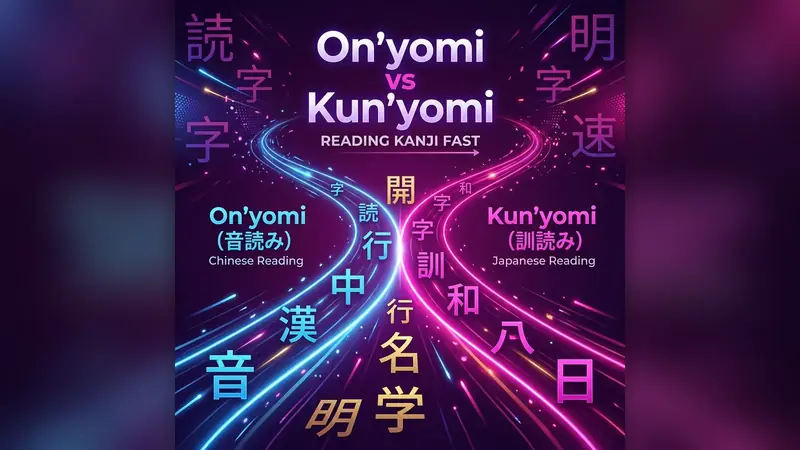
Most kanji have two kinds of reading. On’yomi (音読み, おんよみ) came from Chinese along with the character; kun’yomi (訓読み, くんよみ) is the native Japanese word the kanji was borrowed to write. 日 shows both: ニチ in 毎日 (まいにち, every day), ジツ in 休日 (きゅうじつ, holiday), ひ in 日 (ひ, day, sun) and か in 三日 (みっか, the third of the month).
- On its own, or followed by hiragana: usually kun’yomi. 山 (やま, mountain), 食べる (たべる, to eat).
- Two or more kanji together: usually on’yomi. 学生 (がくせい, student), 電車 (でんしゃ, train).
- Special readings: some words follow neither rule and are learned whole. At N5 the big ones are 今日 (きょう, today), 一人 (ひとり, one person), 二人 (ふたり, two people), 大人 (おとな, adult), 上手 (じょうず, skilful) and 下手 (へた, unskilful).
- Dates are their own system: 一日 (ついたち, the 1st), 二日 (ふつか), 三日 (みっか), 四日 (よっか), 五日 (いつか), 八日 (ようか), 十日 (とおか) and 二十日 (はつか, the 20th).
For the longer explanation, with more examples, read our guide to on’yomi vs kun’yomi.
What are the stroke-order rules for N5 kanji?
Stroke order is not decoration. Following it keeps your kanji in proportion and keeps your handwriting readable when you write fast. Seven rules cover most N5 kanji:
| Rule | N5 examples |
|---|---|
| Top to bottom | 三 言 |
| Left to right | 川 休 |
| Horizontal before vertical where they cross | 十 土 |
| Centre before the two sides | 小 水 |
| Frame first, then the inside; close the box last | 国 日 |
| A vertical stroke through the middle goes last | 中 車 |
| Left-falling stroke before right-falling | 人 八 |
The exception to know at N5 is the pair from the directions group: 右 (みぎ, right) starts with the short diagonal, but 左 (ひだり, left) starts with the horizontal. The full rules, and the other exceptions, are in our kanji stroke-order guide. To see a rule in motion, open the page for 日 and watch the animation before you trace it.
How can you learn 124 kanji in six weeks?
About four new kanji a day, five days a week, is roughly 20 a week, so six weeks covers all 124 with a review day every week. The order below goes from concrete to abstract, so each week leans on the one before.
| Week | Groups | New kanji |
|---|---|---|
| Week 1 | Numbers · Days of the week | 20 |
| Week 2 | Time · Directions and positions | 19 |
| Week 3 | Nature and weather · People and family · The body | 22 |
| Week 4 | Places and getting around · Verbs: coming and going · Colours | 21 |
| Week 5 | Verbs: everyday actions · Adjectives: size and amount | 20 |
| Week 6 | Adjectives: opposite pairs · Common words and ideas | 22 |
Each study day takes 20 to 30 minutes:
- Review first. Go through the kanji from the last few days before adding anything new; memory fades fastest in the first few days.
- Meet four or five new kanji. Open each one’s page, watch the stroke order and say the meaning out loud.
- Write each five to ten times in squares, saying a word that uses it: 日本 (にほん) while you write 日, not a list of readings.
- Learn one or two words per kanji. Readings stick when they are attached to words you already know.
- Test yourself. Cover the kanji, look at the meaning, and write it from memory.
On the sixth day, review the whole week; on the seventh, rest or catch up. LenGaki’s flashcards and quizzes can take over the review step: 30-card flashcard rounds and N5 quizzes work without an account, and a free account covers all 124 N5 kanji.
Four mistakes that slow people down
- Memorising reading lists. 上 has eight readings in the table above. Start with うえ (above) and 上手 (じょうず, skilful) and let the rest arrive with new words.
- Never writing by hand. The JLPT is multiple choice, but writing is how you learn to tell 人 (person) from 入 (enter), 日 (day) from 目 (eye) and 木 (tree) from 本 (book).
- Adding new kanji without reviewing old ones. At 20 a week, week one fades by week four unless every session starts with review.
- Skipping the special readings. 今日 (きょう, today) and 一人 (ひとり, one person) come up constantly at N5.
Is there a workbook with all 124 N5 kanji?
If you like to practise on paper, the LenGaki N5 Kanji book has all 124 N5 kanji with stroke order, on’yomi and kun’yomi, useful example words and writing-practice boxes, organised by category in a clear layout for absolute beginners. It follows the same N5 syllabus as the LenGaki website and Android app, so you can write a kanji in the book and then watch its stroke order online.
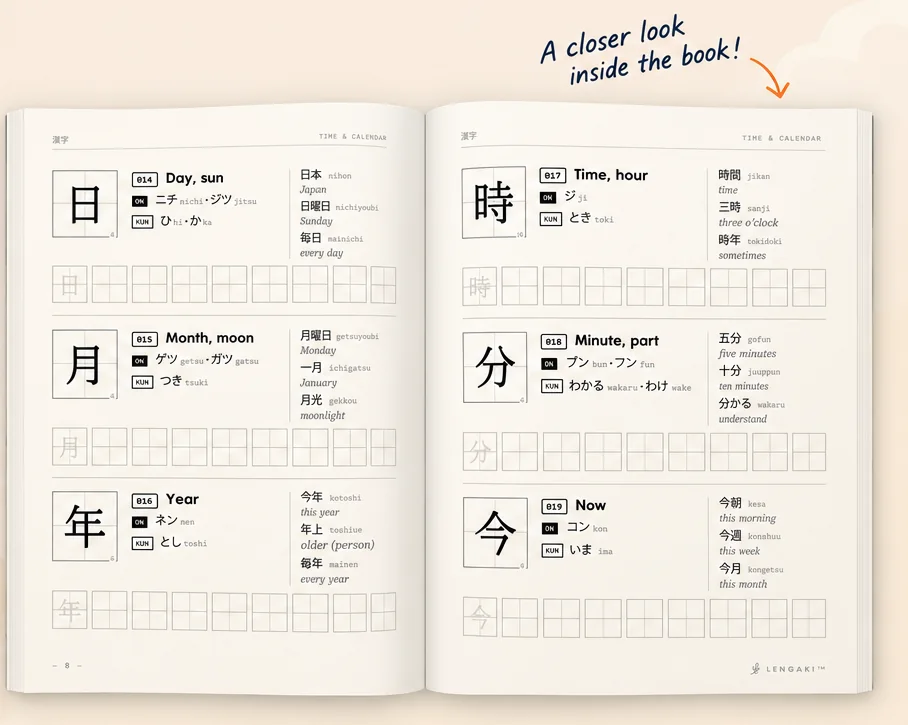
In India the books are delivered by LenGaki’s partner Vyaktigat Vikas; for international delivery, email lengaki2426@gmail.com before ordering. The books page has the details of all four N5 books. Any squared practice notebook works too: what matters is writing in squares, so you learn to keep each kanji in proportion.
Frequently asked questions
How many kanji are on the JLPT N5?
There is no official number, because the JLPT stopped publishing kanji lists with its 2010 revision. Most N5 lists have about 100 kanji; LenGaki’s N5 set has 124, and it is worth adding 円, 午, 週, 天, 魚 and 道, which many other lists include.
How long does it take to learn all 124 N5 kanji?
About six weeks at roughly four new kanji a day, five days a week, with a review day each week. Reading them comes sooner than writing them from memory, so keep reviewing after week six.
Do I need to learn every reading of each N5 kanji?
No. Learn each kanji through one or two common words, such as 毎日 (まいにち, every day) for 日, and pick up the other readings as they appear in new vocabulary.
Do you have to write kanji by hand in the JLPT?
No. The JLPT is entirely multiple choice, so you only need to read kanji and recognise the right one. Writing them by hand is still one of the best ways to remember them and to tell look-alikes such as 人 and 入 apart.
Where can I practise N5 kanji stroke order for free?
Every kanji on LenGaki has its own free page with animated stroke order and tracing practice, plus its on’yomi, kun’yomi and example words; lengaki.com/kanji/日 is a good one to start with. No account is needed to read them.
Is there a book with all 124 N5 kanji?
Yes. The LenGaki N5 Kanji book covers all 124 with stroke order, on’yomi and kun’yomi, example words and writing-practice boxes. In India it is delivered by LenGaki’s partner Vyaktigat Vikas; for international delivery, email lengaki2426@gmail.com before ordering.