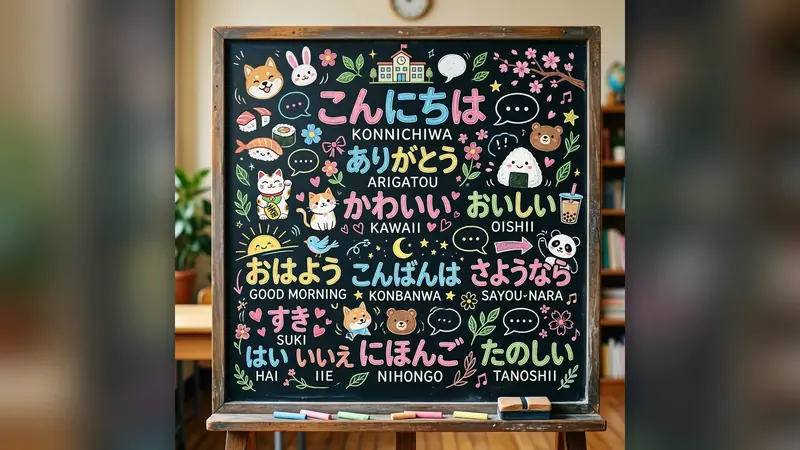
Reading is the single fastest way to expand your Japanese vocabulary and reinforce grammar in natural context. But finding the right reading material for your level is surprisingly difficult. Too easy and you make no progress; too hard and you burn out. This guide covers the best free websites for Japanese reading practice, organized by difficulty level — from absolute beginner to near-native.
We also explain the best reading strategy to use with each site so you're not just passively consuming text but actively building your vocabulary bank and grammar intuition.
Why Reading is the Master Skill
Reading Japanese simultaneously builds your vocabulary (new words in context), reinforces grammar (real sentence structures), trains your kanji recognition (continuous visual exposure), and develops reading speed. For most learners, an hour of active reading with word lookups teaches more than an hour of app drills, once you know the N5 basics (roughly 700–800 words).
Essential Browser Setup Before You Start Reading
Before using any of these sites, install these two tools that will transform your reading experience:
Yomitan (Browser Extension)
Add it to Chrome or Firefox from the extension store, then import a dictionary such as JMdict
Hover your mouse over any Japanese word on any webpage and instantly see its reading and meaning (plus extras such as word frequency or JLPT level, depending on the dictionaries you add). Game-changing for reading practice.
Jisho.org (Japanese Dictionary)
No installation needed — just open jisho.org in a tab
The gold standard Japanese-English dictionary. Search by kanji, kana, romaji, or English. Shows JLPT level, stroke order, example sentences, and kanji breakdowns.
Complete Website Comparison by Difficulty Level
| Website | Level | Content Type | Furigana | Free | Rating |
|---|---|---|---|---|---|
| NHK News Web Easy | N5–N4 | Simplified news | ✅ Full furigana | ✅ Free | ⭐⭐⭐⭐⭐ |
| Tadoku Graded Readers | N5–N4 | Simple stories | ✅ Full furigana | ✅ Free (basic) | ⭐⭐⭐⭐ |
| Watanoc | N4–N3 | Short news stories | ✅ Partial | ✅ Free | ⭐⭐⭐⭐ |
| Erin's Challenge (エリンが挑戦) | N5–N4 | Interactive stories + video | ✅ Available | ✅ Free | ⭐⭐⭐⭐ |
| Satori Reader | N4–N2 | Original stories for learners | ✅ Adaptive furigana | ⚠️ Limited free | ⭐⭐⭐⭐⭐ |
| Manga (via Bookwalker/ComicWalker) | N4–N2 | Manga (real Japanese) | ⚠️ Character speech varies | ✅ Many free volumes | ⭐⭐⭐⭐ |
| Mainichi Shimbun (毎日新聞) | N3–N2 | Real daily newspaper | ❌ No furigana | ⚠️ Partly free | ⭐⭐⭐ |
| Aozora Bunko (青空文庫) | N2–N1 | Classic Japanese literature | ⚠️ Only on hard words | ✅ Free | ⭐⭐⭐⭐ |
| Yahoo! Chiebukuro (Yahoo!知恵袋) | N3–N2 | Casual native Q&A writing | ❌ No furigana | ✅ Free | ⭐⭐⭐ |
| Twitter/X (Japanese accounts) | N4–N1 | Real native daily language | ❌ No furigana | ✅ Free | ⭐⭐⭐⭐ |
Deep Dive: The Best Sites at Each Level
🟢 Beginner (N5–N4): NHK News Web Easy
NHK News Web Easy (news.web.nhk/news/easy) is the absolute best starting point for beginner Japanese reading. It's the official simplified news website published by Japan's national broadcaster, NHK. Every article covers real current events written in simple Japanese with:
- Furigana on every kanji (you can switch it off as you improve)
- Built-in dictionary — highlighted words come with a short explanation in simple Japanese
- Audio — listen to each article read aloud
- New articles every weekday — fresh content prevents boredom
- Real N4–N5 vocabulary — not artificial learning-app language
How to use it: Read the headline and try to guess the topic. Read the first paragraph with furigana. Look up any unfamiliar words and save the ones worth keeping (in LenGaki's vocabulary list, tap ☆ to save a word). Then listen to the audio version while following along.
🟡 Intermediate (N4–N3): Satori Reader
Satori Reader (satorireader.com) is arguably the most sophisticated reading platform for Japanese learners. It offers original fiction stories written specifically for learners, with an adaptive furigana system that shows readings only for kanji you haven't marked as known.
- Adaptive furigana — mark the kanji you know (or import them from WaniKani) and furigana appears only where you need it
- Explanations — tap a word for its meaning or a sentence for its translation, and read notes on the grammar and culture in each episode
- Multiple stories — covering different topics and registers (casual, formal, business)
- Audio narration — professional voice actors read every episode
🟠 Upper-Intermediate (N3–N2): Manga (Real Content)
By N3 level, you should be reading real manga. Start with slice-of-life manga that uses simple, everyday dialogue:
| Manga Title | Level | Why Good for Learning |
|---|---|---|
| よつばと!(Yotsubato!) | N4–N3 | Everyday family conversations; simple vocabulary; furigana on all kanji |
| ドラえもん (Doraemon) | N4–N3 | Short episodic stories; simple Japanese; children's vocabulary |
| 聲の形 (A Silent Voice) | N3–N2 | Natural school conversations; realistic dialogue; emotionally engaging |
| 進撃の巨人 (Attack on Titan) | N3–N2 | Dramatic dialogue; formal speech; builds reading speed under narrative pressure |
| ワンピース (One Piece) | N3–N2 | Huge vocabulary variety; character dialects; excellent for N2 prep |
🔴 Advanced (N2–N1): Aozora Bunko + News
Aozora Bunko (aozora.gr.jp) is a digital library of public domain Japanese literature — over 17,000 works, including Natsume Soseki, Akutagawa, and Dazai. Furigana appears only on hard words. Dense vocabulary. Classical sentence structures. This is genuine N1-level training.
The Active Reading Strategy (For Maximum Retention)
Active Japanese Reading Protocol
First Pass — No Lookup
Read the full paragraph without looking up anything. Try to understand from context. This builds tolerance for ambiguity and trains comprehension without crutches.
Second Pass — Mark Unknowns
Re-read and underline/highlight every word or grammar pattern you didn't fully understand. Don't look them up yet.
Lookup Session
Look up marked words using Yomitan or Jisho. For each word, read 2–3 example sentences to understand it in multiple contexts.
Save the Words That Matter
Save the 5–10 most important new words: star them in LenGaki's vocabulary list (they collect under Saved), or add them to an Anki deck if they aren't on the JLPT lists. This is the critical step that converts passive reading to active vocabulary retention.
Audio Read-Along (if available)
If the site has audio (NHK Easy, Satori Reader), listen while reading. This connects reading to listening comprehension and pronunciation.
Review Next Day
Go over yesterday's saved words again the next day, and again a few days later (Anki schedules this for you). Spaced review is where reading vocabulary gets cemented into long-term memory.
How LenGaki Powers Your Reading Practice
Reading practice and structured vocabulary study are two sides of the same coin. Here's how LenGaki's platform connects directly to your reading practice:
Pre-load N5/N4 vocabulary before reading
Learn LenGaki's 726 JLPT N5 words with its flashcard decks before you start NHK News Web Easy, and you'll recognize far more of the words in beginner texts.
Save your reading discoveries
Star the JLPT words you meet while reading to keep them in LenGaki's Saved list. For words and whole sentences outside the JLPT lists, keep an Anki deck: that's sentence mining.
Grammar reference for reading confusion
When a sentence structure confuses you during reading, look it up in LenGaki's grammar lessons for a structured explanation with Japanese examples.
Check your progress
LenGaki's analytics show your quiz accuracy for vocabulary, kanji, grammar and listening, your study time and a predicted JLPT score, so you can see when you're ready for harder texts.
📖 Build the Vocabulary Foundation Before You Start Reading
Reading is most comfortable when you already know almost every word on the page (reading research puts it at about 95–98%), so graded material comes first. Build your foundation with LenGaki's JLPT N5 vocabulary, then start reading NHK News Web Easy with much better comprehension from Day 1.