Language shapes how we see the world. Japanese is renowned for having highly specific words that capture fleeting moments, complex emotions, and deep philosophical concepts that would take an entire sentence to explain in English. Here are 10 of the most beautiful untranslatable Japanese words.
The Power of Kanji
Because Japanese uses Kanji (ideograms), words are built from visual concepts rather than just sounds. This allows Japanese to pack immense poetic meaning into very short words by combining the characters for "sun," "tree," and "leak" to create an entirely new emotional concept.
Nature & Ephemeral Beauty
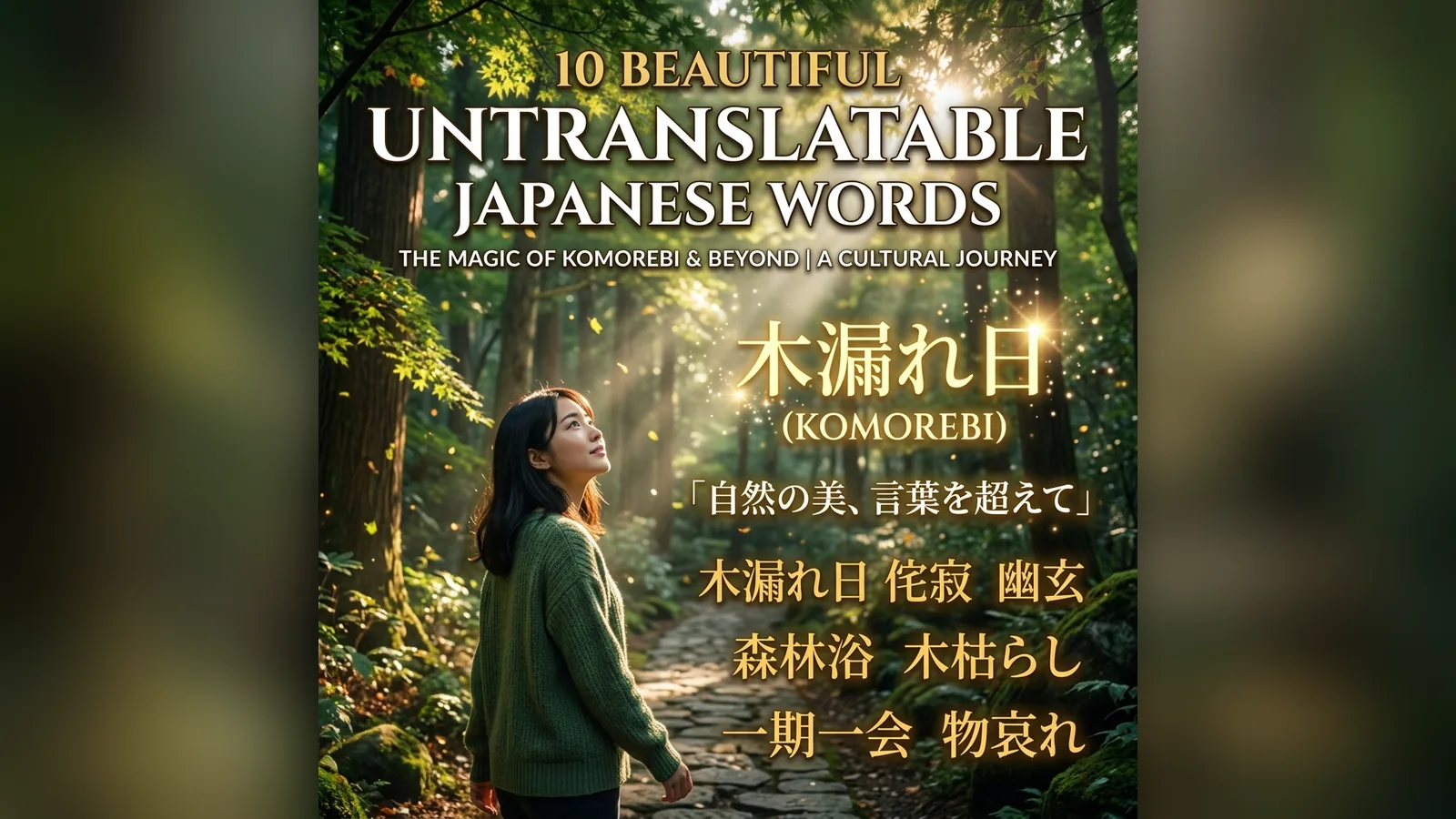
1. 木漏れ日 (Komorebi)
Literal translation: Tree-leak-sun
The dappled sunlight that filters through the leaves of trees. It captures that specific, peaceful feeling of walking through a forest on a bright afternoon.
2. 森林浴 (Shinrin-yoku)
Literal translation: Forest bathing
The therapeutic act of spending time in a forest to absorb its atmosphere, reducing stress and improving well-being.
3. 花霞 (Hanagasumi)
Literal translation: Flower mist
When there are so many cherry blossoms blooming in the distance that they look like a soft white and pink mist rolling across the hills.
Philosophy & Mindset
| Word | The Deep Meaning |
|---|---|
| 4. 生き甲斐 (Ikigai) | The reason you get out of bed in the morning: whatever makes your life feel worth living, from your work to a hobby or your grandchildren. (The popular four-circle diagram of what you love, what you are good at, what the world needs and what you can be paid for is a Western addition, not the Japanese meaning.) |
| 5. 侘寂 (Wabi-sabi) | Finding beauty in imperfection, impermanence, and the natural aging of things. A chipped tea cup is considered more beautiful than a pristine, factory-new one. |
| 6. 改善 (Kaizen) | Continuous, incremental improvement. The business philosophy that making small improvements every day leads to massive long-term success. |
| 7. 金継ぎ (Kintsugi) | The art of repairing broken pottery with gold lacquer. Rather than hiding the damage, the cracks are highlighted with gold, making the repaired object more beautiful than the original. |
Quirky Human Behaviors
積ん読 (Tsundoku)
The act of buying lots of books, bringing them home, piling them up, and never actually reading them.
食い倒れ (Kuidaore)
To eat yourself into bankruptcy. This word is famously associated with the food-obsessed city of Osaka.
木枯らし (Kogarashi)
The cold, bitter wind that blows right at the beginning of winter, signaling that autumn has officially died.
📖 Discover the Magic of Kanji
The beauty of Japanese lies in the Kanji. LenGaki's kanji pages show each character's readings, example words and animated stroke order, and let you trace it yourself: 2,057 kanji from N5 to N1, and every kanji page is free to open.