Artificial intelligence has fundamentally changed how people learn Japanese. What used to require years of classroom instruction, expensive tutors, and mountains of textbooks can now be accelerated dramatically with the right AI-powered tools. But not all AI tools are created equal — and knowing which ones to use for which skill will make or break your progress.
In this guide, we look at the main AI tools for Japanese learning across five critical skill areas: vocabulary acquisition, grammar understanding, reading comprehension, listening practice, and speaking output, and explain exactly where each one fits in your study stack. LenGaki, which publishes this blog, is one of the tools, so we also say where others do a job better.
What AI Changes in Language Learning
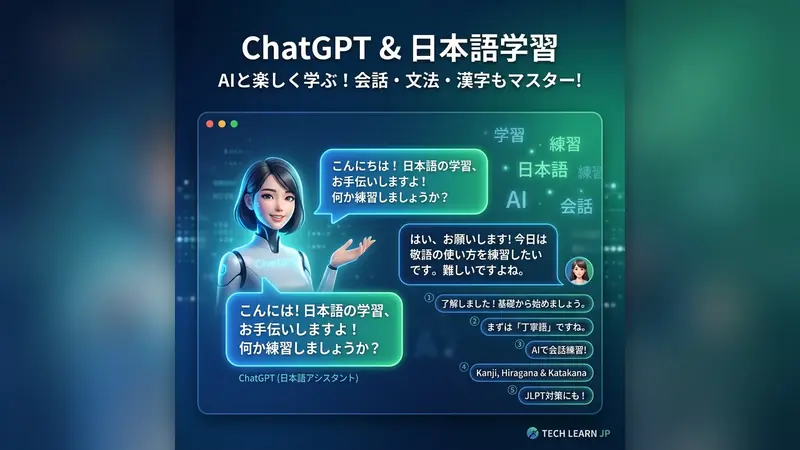
AI tutors explain grammar the moment you get stuck, and AI conversation partners let you practice speaking without the anxiety of embarrassing yourself in front of native speakers, so you practice more often. They still make mistakes, so check anything important against a dictionary or your textbook.
The 5 Skill Areas You Need AI For
Before evaluating tools, understand the five pillars of Japanese learning and which AI category serves each best:
Vocabulary (語彙)
Spaced-repetition flashcards
Apps that schedule reviews around how well you remember each word
Grammar (文法)
AI explanation engines
Instant grammar explanations with example generation
Reading (読書)
Popup dictionaries
Hover over a word on any page to see its reading and meaning
Listening (聴解)
AI speech recognition
Shadowing practice with pronunciation scoring
Speaking (会話)
AI conversation partners
Role-play dialogues with AI native speaker personas
Writing (書く)
AI correction tools
Instant grammar + naturalness correction for written Japanese
Complete AI Tool Comparison Table
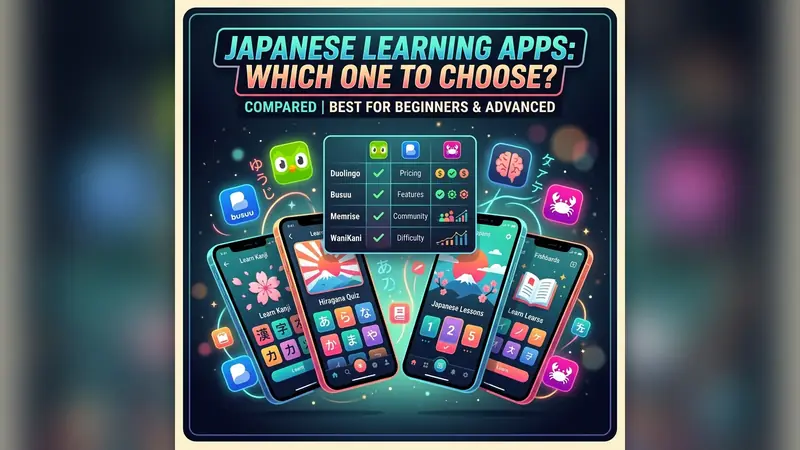
| Tool | Type | Best Skill Area | Price |
|---|---|---|---|
| LenGaki ✨ | Course + AI tutor (Lena) | JLPT N5 roadmap, vocab, kanji and grammar; Lena for questions | Free / Pro (Lena: 3 free messages a day) |
| ChatGPT | Conversational AI | Grammar explanations + Speaking practice | Free / paid plans |
| Anki | Spaced-repetition flashcards | Vocabulary retention with your own decks | Free (iPhone app paid) |
| Duolingo | Gamified app | Beginner motivation, basic vocab | Free / paid plans |
| Yomitan (successor to Yomichan) | Browser popup dictionary | Reading native content | Free |
| DeepL | AI translation | Checking your understanding of native text | Free / Pro |
| Claude / Gemini | Conversational AI | Grammar questions + writing feedback | Free / paid plans |
| Speechling | Recordings reviewed by human coaches | Pronunciation accuracy | Free plan / paid plan |
| Bunpro | Grammar spaced repetition | Grammar acquisition | $5/mo (30-day free trial) |
Prices change often; check each tool's own site. LenGaki is our product, so we've left out star ratings rather than score ourselves.
The Optimal AI Learning Stack (By Level)
The best results come from combining multiple AI tools strategically. Here's the recommended stack for each level:
| Level | Primary Tool | Secondary Tools | Daily Time |
|---|---|---|---|
| Absolute Beginner (N5 prep) | LenGaki — kana course, then N5 roadmap lessons | Duolingo (motivation), ChatGPT or Lena (grammar Q&A) | 30–45 min/day |
| Beginner (N5–N4) | LenGaki — Grammar + Vocab decks | Bunpro (grammar SRS), Yomitan (reading) | 45–60 min/day |
| Intermediate (N4–N3) | LenGaki + Anki custom decks | LenGaki speaking practice + an AI chat partner (speaking), DeepL (reading checks) | 60–90 min/day |
| Upper-Intermediate (N3–N2) | Anki sentence mining + LenGaki | Claude/ChatGPT (writing feedback), Speechling | 90–120 min/day |
| Advanced (N2–N1) | Native content + popup dictionaries | AI conversation partner (ChatGPT, Gemini or Claude), custom Anki | 2+ hours/day |
Where LenGaki Fits (and Where It Doesn't)
Most AI language tools are general-purpose. LenGaki is a Japanese course with an AI tutor built in, so it does some jobs well and leaves others to the tools above:
Lena, an AI Tutor Inside the Course
Ask Lena about grammar, words, kanji and keigo and get answers with example sentences you can listen to, or highlight text in a lesson, a dictionary entry or a blog post and tap “Explain with Lena”. A free account includes 3 messages a day; Pro makes them unlimited.
A JLPT-Shaped Course
Vocabulary (7,788 words) and kanji (2,057) are grouped from N5 to N1, grammar (445 points) from N5 to N2, and a 73-lesson roadmap takes you from kana to N5. Generic tools like Anki make you build this structure yourself.
Progress You Can See
XP, levels and a daily streak, plus an analytics page with your quiz accuracy by skill and a predicted JLPT score. Your progress syncs with the LenGaki Android app.
Speaking With a Score
200 everyday sentences in 8 topics. Hear each one, say it back and get a pronunciation score from speech recognition (free, in Chrome on desktop and Android).
Exam Practice
Timed N5 and N4 mock exams in the JLPT format, with listening audio. N5 sets 1 and 2 are free.
What It Doesn't Do
There's no spaced-repetition scheduler (flashcards are a know / see-again sort, with unknown cards first), no iOS app (on an iPhone, use the website), and free accounts get 3 Lena messages a day.
AI Tool Selection Flowchart
Not sure which AI tool to start with? Follow this decision tree:
Which AI Tool Should You Use?
❓ Are you a complete beginner (no kana knowledge)?
→ Start with LenGaki's kana course. It's free, needs no account and is built specifically for this starting point. Add Duolingo for daily gamified motivation.
❓ Do you need grammar explained in plain English instantly?
→ ChatGPT, Claude or Gemini are excellent for grammar Q&A, and Lena answers inside LenGaki (3 free messages a day). Ask: 'Explain て-form in Japanese with 5 examples' for instant structured responses.
❓ Are you building a vocabulary deck for JLPT N5–N3?
→ LenGaki's ready-made JLPT vocabulary decks save you the setup: they're grouped by JLPT level and come with example sentences (N5 free; N4 and above with Pro).
❓ Do you want to practice speaking and pronunciation?
→ LenGaki's speaking practice scores your pronunciation as you read sentences aloud (free), and Speechling has human coaches review your recordings. ChatGPT's voice mode is good for conversation practice, but it won't score your pronunciation.
❓ Do you want to read native Japanese content (manga, articles)?
→ Install the Yomitan browser extension. It shows the reading and meaning of any word you hover over while reading real Japanese content.
What AI Cannot Replace
AI tools are powerful accelerators — but they have real limitations that are important to understand:
| AI Does Well | AI Cannot Replace |
|---|---|
| ✅ Instant vocabulary recall via SRS | ⚠️ The raw emotional experience of speaking Japanese with a real human |
| ✅ Grammar explanations on demand | ⚠️ Deep cultural intuition that comes from immersion in Japan |
| ✅ Progress tracking and analytics | ⚠️ The motivation that comes from real friendship and connection in Japanese |
| ✅ Consistent, judgment-free practice | ⚠️ Nuanced social register (keigo) that requires real social context to master |
| ✅ 24/7 availability | ⚠️ Listening comprehension in noisy, fast, dialectal real-world conditions |
🚀 Try LenGaki: a Structured Course With an AI Tutor
LenGaki combines a 73-lesson roadmap from kana to JLPT N5, JLPT-level vocabulary, kanji and grammar, flashcards, speaking practice and timed mock exams with Lena, an AI tutor you can ask about anything you're studying. Use it on the website or the Android app.