Japan is a society built on unspoken rules and social harmony (Wa). While Japanese people are incredibly forgiving of foreigners making mistakes, knowing what not to do will make your life significantly easier and help you earn the deep respect of locals. Here are the top cultural faux pas and mistakes foreigners make in Japan.
The Golden Rule: Read the Air
In Japan, the concept of 空気を読む (kuuki o yomu, reading the air) is paramount. If a train is completely silent, you should be silent. If everyone is standing on the left side of the escalator, stand on the left. When in doubt, simply observe what the locals are doing and copy them.
1. The Chopstick Taboos
Chopsticks are not just eating utensils; they have strong ties to Buddhist funeral rites. Mishandling them is considered extremely taboo.
❌ Never Do This
- • Sticking chopsticks vertically into rice (represents incense at a funeral).
- • Passing food directly from your chopsticks to someone else's chopsticks (done with bones at funerals).
- • Pointing at people or things with chopsticks.
- • Rubbing wooden chopsticks together (implies they are cheap).
✅ Do This Instead
- • Place them flat across your bowl or on a chopstick rest (hashioki).
- • Move the food to a plate first, then let the other person pick it up.
- • Rest them neatly when not actively eating.
2. Train and Subway Etiquette
Trains in Tokyo transport millions of people daily. Efficiency and silence are expected.
- No phone calls: Talking on the phone on a local train is considered incredibly rude. Texting or playing games (silently) is fine.
- Backpacks off: When a train gets crowded, take off your backpack and hold it in front of you or put it on the overhead rack so it doesn't hit people.
- Wait to board: Stand in the designated lines on the platform, and wait for everyone to exit the train completely before you step on.
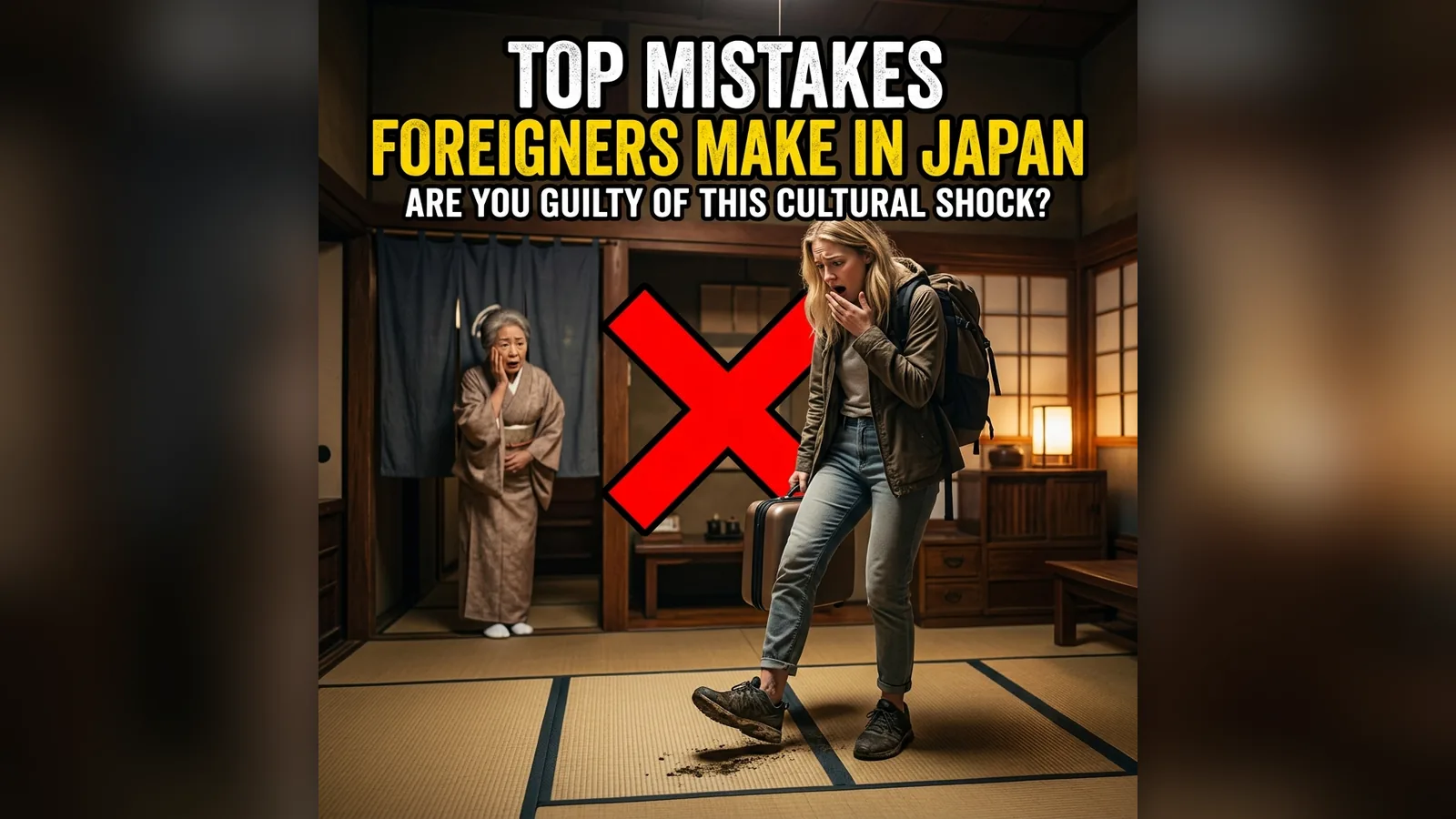
3. The Indoor/Outdoor Shoe Rule
Wearing outdoor shoes inside a Japanese home, traditional inn (Ryokan), or certain restaurants is a massive offense, as it brings outside dirt into clean spaces.
| Location | Shoe Policy |
|---|---|
| Genkan (Entranceway) | Take shoes off here. Point the toes toward the door for when you leave. |
| Living Spaces / Tatami | Slippers only on wood floors. Socks or bare feet only on Tatami mats (never slippers on tatami!). |
| Restroom | Swap to the specific 'toilet slippers' provided at the restroom door. Don't forget to take them off when you leave! |
| Fitting Rooms | Take your shoes off before stepping onto the raised platform to try on clothes. |
4. Tipping (Don't Do It)
There is absolutely no tipping culture in Japan. Excellent service is considered a standard part of the job, not something that requires extra compensation. If you leave money on a table at a restaurant, the waiter will likely run down the street to return your "forgotten change."
5. Walking and Eating
While it's not strictly illegal, walking around while eating or drinking is generally frowned upon. If you buy a drink from a vending machine, drink it standing next to the machine (where the recycling bin is). If you buy street food, eat it standing near the stall before moving on.
🎌 Learn Culture Alongside Language
Language is inseparable from culture. Learn polite, everyday Japanese step by step with LenGaki's roadmap from kana to JLPT N5, and when a phrase or custom puzzles you, ask Lena, LenGaki's AI tutor, about the culture behind it (3 free messages a day).