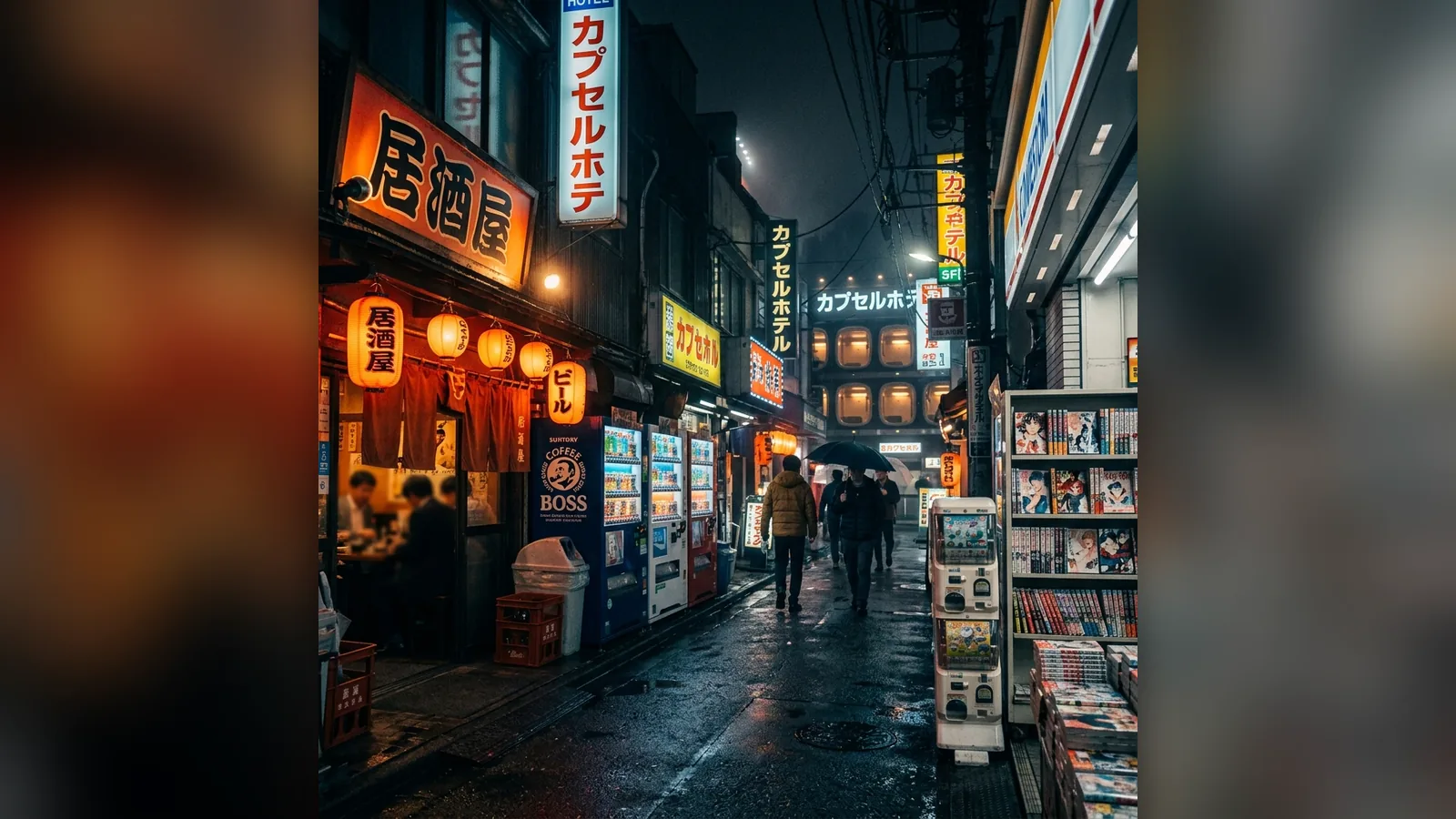
Travel blogs show you the sakura, the sushi, and the shinkansen. But there's a whole other side to Japan that guidebooks never mention. From the invisible social rules to the shocking silence of public spaces — here are the things that will genuinely surprise you about living in Japan.
The Japan Most Tourists Never See
Japan has two faces — the tourist-facing one of impeccable politeness, and the daily-life one that requires navigating complex unwritten social rules, bureaucratic paperwork in Japanese only, and a distinct insider/outsider dynamic that takes years to truly understand.
The Big Surprises — Categorized
| Category | What Nobody Tells You | Reality Check |
|---|---|---|
| Social Rules | Japanese are friendly and open to foreigners | There is a formal outer layer (tatemae) and a private inner layer (honne). True friendship takes years to build. |
| Language | You can get by with English in Japan | Outside major tourist areas, English is rare. Even train station staff may not speak English. Japanese is essential. |
| Bureaucracy | Japan is tech-forward and digital | Government offices still use paper and fax machines (fakkusu). Many procedures require in-person visits with specific documentation. |
| Silence | Japan is vibrant and lively | Public spaces like trains and buses are eerily silent. Talking on the phone is considered rude. Crowds are silent. |
| Cash culture | Japan is modern and card-friendly | Many small restaurants, temples, and rural areas are cash-only. Keep ¥10,000 in cash at all times. |
| Recycling | Garbage disposal is simple | Japan has one of the world's most complex recycling systems. Wrong garbage disposal can be reported to the landlord. |
| Loneliness | Japan is welcoming to foreigners | Many expats report significant loneliness, especially in the first 6 months. Japanese social circles are very closed. |
| Working culture | Japan has healthy work-life balance | Japan has a culture of karōshi (過労死 — death from overwork), and long hours with unpaid overtime are still common in some jobs, even though most employees work under 60 hours a week. |
Tatemae vs. Honne — The Invisible Social Layer
The most important concept to understand about Japanese social interaction is the distinction between tatemae (建前) and honne (本音).
- Tatemae (建前): The public face — what someone says to be polite, regardless of what they actually think or feel.
- Honne (本音): The true feelings and desires that are expressed only in private, typically among very close friends or when drinking alcohol.
When a Japanese person says "That's interesting…" (それは面白いですね) in a flat tone, it may actually mean they disagree or find it problematic. Learning to read these social signals takes time and language skills.
The Garbage System (It's Serious)
Japanese recycling and garbage disposal is not optional. Every municipality has strict rules, and violations can cause serious problems with your landlord or neighbors. Here's the typical breakdown:
| Garbage Type | Japanese Name | Collection Day (Typical) |
|---|---|---|
| Burnable garbage (food waste, tissues) | 可燃ごみ (kanen gomi) | 2–3 times per week |
| Recyclable plastics | プラスチック (purasuchikku) | Once per week |
| Bottles & cans | ビン・缶 (bin/kan) | Once per week |
| Cardboard & paper | 段ボール・紙 (danbooru/kami) | 1–2 times per month |
| Non-burnable items | 不燃ごみ (funen gomi) | Once or twice per month |
| Large items (furniture) | 粗大ごみ (sōdai gomi) | Pre-scheduled only; must pay fee |
The Train Etiquette Nobody Explains
Japanese train culture has extremely detailed unwritten rules that will catch you off guard:
No phone calls on trains
Texting is fine. Talking on the phone is socially unacceptable, even if the train is packed.
Silence is golden
Even in crowded rush-hour trains, conversations are kept very quiet. Large groups keep voices low.
Bag etiquette matters
Put your backpack on the luggage rack or hold it in front of you during peak hours — not on your back.
Priority seats are serious
Priority seats (優先席) near the doors are for elderly/pregnant/disabled. Young people often stand rather than take them.
Phone on silent mode
Your phone should always be in 'manner mode' (マナーモード). Ring tones are socially inappropriate.
Escalator side matters
In Tokyo: stand on the left, walk on the right. In Osaka: opposite! Getting this wrong is socially awkward.
The Seasonal Life Cycle in Japan
Japan's four seasons are intense and each one comes with specific social events, food, and cultural activities that shape daily life in ways visitors never anticipate:
Cherry blossom season (花見, hanami). Everyone has picnics under sakura trees. Winter gear suddenly stored away. University entrance ceremonies.
Rainy season (梅雨, tsuyu) in June; brutal humid heat in July-August. Festival season (祭り, matsuri). Fireworks (花火, hanabi) events nationwide.
Koyo (紅葉) — stunning red/orange leaf season. Cultural festivals. University sports days. Temperature perfect for outdoor activities.
Christmas in Japan is a couple's holiday (not family). New Year (お正月, o-shōgatsu) is the biggest Japanese holiday. Everything shuts down January 1–3.
🇯🇵 Master Japanese to Truly Experience Japan:
The difference between a tourist experience and a genuine Japan experience is the language. Learning Japanese unlocks the real Japan — the quiet izakayas, the conversations with shop owners, the friendships that take years to build but last forever.