Japanese grammar is often painted as an impenetrable wall. But the truth is, Japanese grammar is incredibly logical, features almost no irregular exceptions, and is much simpler than European languages like Spanish or French in terms of conjugations.
There are no gendered nouns, no plural agreement rules, and only two primary verb tenses: past and present (non-past). If you learn the core rules of sentence order and particles, you can build hundreds of sentences. In this beginner guide, we break down the essentials step-by-step.
The Core Rule of Verbs
In English, sentences follow a Subject-Verb-Object (SVO) pattern. In Japanese, sentences follow a Subject-Object-Verb (SOV) layout. The most critical rule of Japanese grammar is: The verb must always go at the very end of the sentence. Everything else is optional!
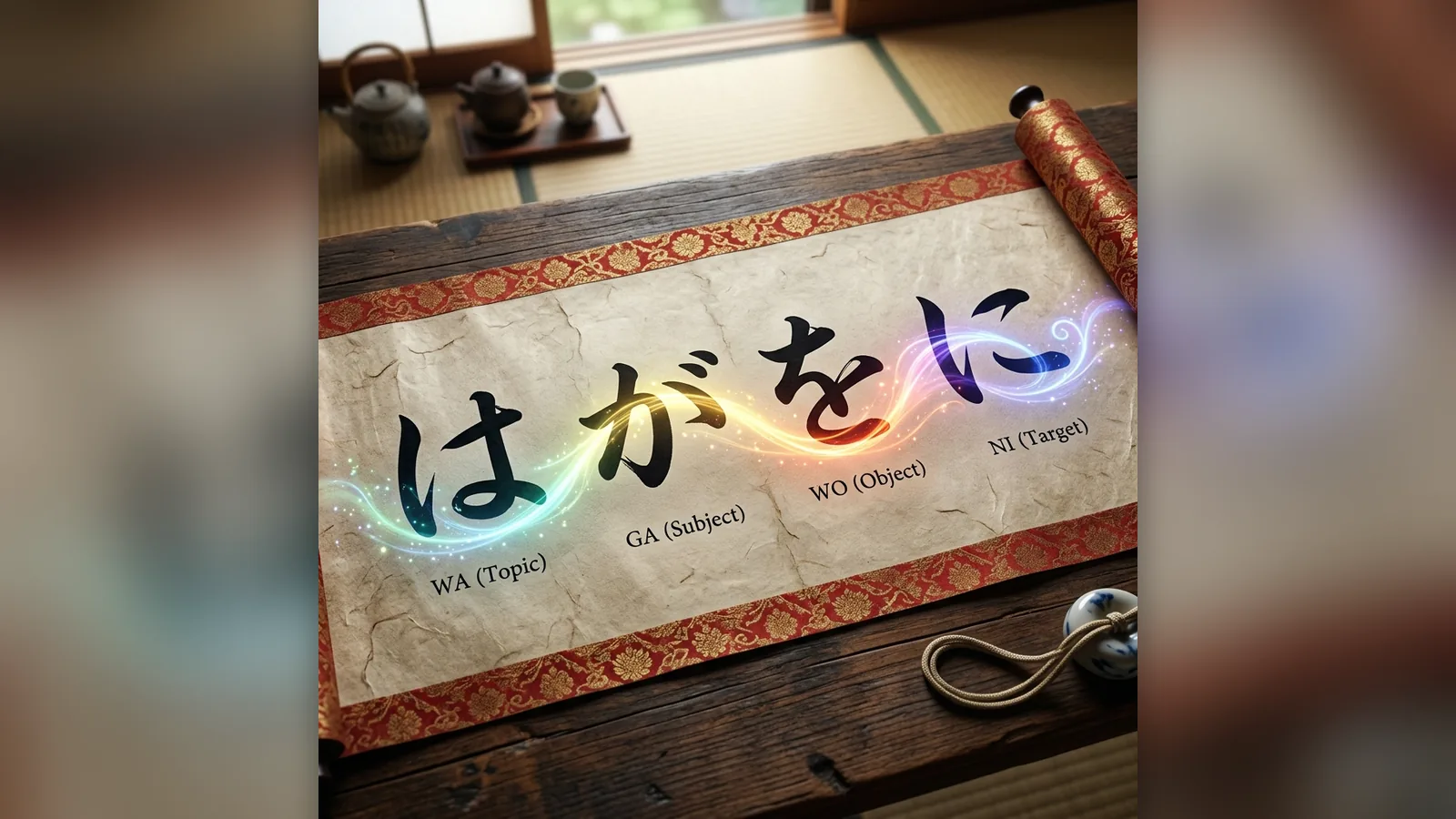
The 8 Core N5 Particles
Particles are small suffixes attached to nouns to identify their grammatical role in the sentence. Think of them as markup tags for your brain.
| Particle | Pronunciation | Grammatical Role | Example Sentence |
|---|---|---|---|
| は | wa (written as 'ha') | Marks the Topic of the sentence ("As for...") | 私は学生です。 (I am a student.) |
| が | ga | Marks the specific Subject doing the action | 猫がいます。 (There is a cat.) |
| を | wo (pronounced 'o') | Marks the Direct Object of a verb | 水を飲みます。 (I drink water.) |
| に | ni | Marks target destination, time, or recipient | 東京に行きます。 (I will go to Tokyo.) |
| で | de | Marks where an action takes place, or the tool used | 電車で行きます。 (I will go by train.) |
| も | mo | Replaces は/を to mean "also" or "too" | 私も行きます。 (I will go too.) |
| と | to | Means "and" (exhaustive list) or "with" | 友達と食べます。 (I eat with a friend.) |
| へ | e (written as 'he') | Marks direction of movement ("towards") | 日本へようこそ! (Welcome to Japan!) |
Building a Basic Japanese Sentence
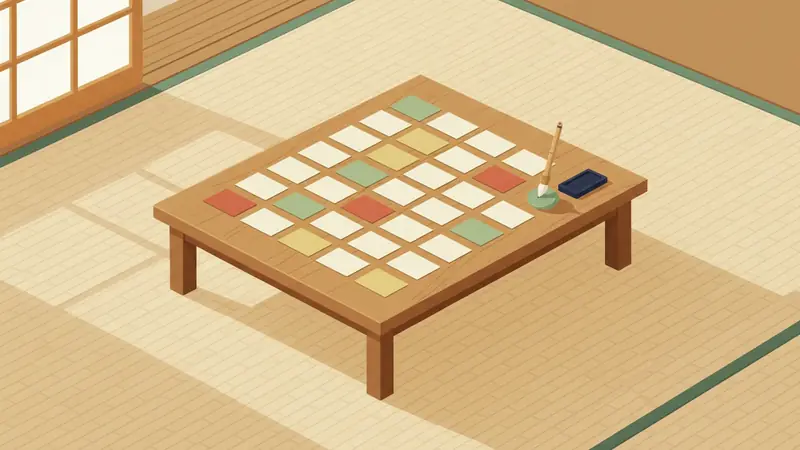
Building a sentence is like stacking blocks. Look at how we build a sentence by attaching blocks and modifying particles:
Core Verb Conjugation Rules (Polite Forms)
Verbs are divided into U-verbs (Group 1) and Ru-verbs (Group 2), plus two irregular verbs (する to do, 来る to come). Here is how polite endings conjugate:
| Form | Ru-Verb (食べる - to eat) | U-Verb (飲む - to drink) |
|---|---|---|
| Present Affirmative (Will do) | 食べます (tabemasu) | 飲みます (nomimasu) |
| Present Negative (Won't do) | 食べません (tabemasen) | 飲みません (nomimasen) |
| Past Affirmative (Did) | 食べました (tabemashita) | 飲みました (nomimashita) |
| Past Negative (Didn't do) | 食べませんでした (tabemasendeshita) | 飲みませんでした (nomimasendeshita) |
💡 Put Grammar Rules Into Action:
Stop memorizing static conjugation lists. Use our dynamic, interactive grammar drills to practice forming verbs and inserting particles correctly.
Open Grammar Lessons