If you send an email to a Japanese client using the standard "Desu/Masu" polite Japanese you learned in textbooks, you might unintentionally insult them. The Japanese corporate world operates on Keigo (敬語)—a complex system of honorific language used to show immense respect and lower your own status. Here is a crash course in writing business emails.
The Uchi-Soto Rule (Inside vs. Outside)
The golden rule of Keigo. Uchi (Inside) is your company. Soto (Outside) is the client. When talking to a client about your own boss, you MUST drop the honorifics. You say "Tanaka will call you," NOT "Tanaka-san will call you," because your boss is "Uchi" and the client is "Soto." Elevating your boss in front of a client is highly disrespectful to the client.
The Structure of a Japanese Business Email
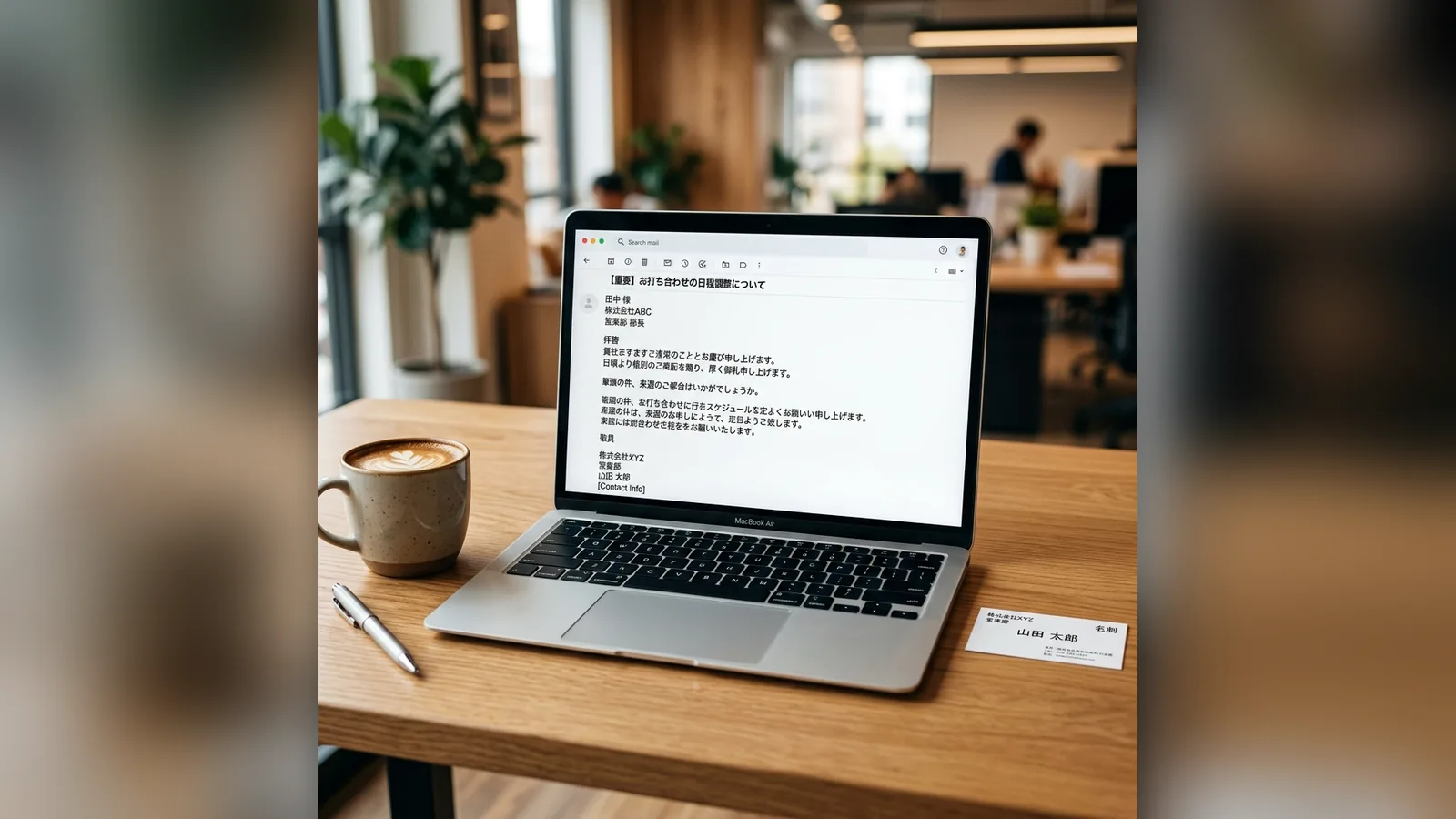
Western emails get straight to the point. Japanese emails follow a strict, ritualistic structure of greetings and closing remarks, regardless of the content.
株式会社〇〇
営業部
田中様
(Company Name, Department, Name + Sama)
いつも大変お世話になっております。
LenGakiの[Your Name]です。
(We are always indebted to your kindness. I am [Your Name] from LenGaki.)
明日の会議の件について、ご連絡いたしました。
...
(I am contacting you regarding tomorrow's meeting... Keep this part Keigo-heavy.)
引き続き、よろしくお願いいたします。
(Please continue to favor us with your cooperation.)
Essential Keigo Replacements
In Keigo, everyday verbs morph into completely different words depending on whether you are doing the action (Humble) or the client is doing the action (Respectful).
| Meaning | Standard (Polite) | Humble (You do it) | Respectful (Client does it) |
|---|---|---|---|
| To Go / Come | 行きます / 来ます (Ikimasu / Kimasu) | 参ります (Mairimasu) | いらっしゃいます (Irasshaimasu) |
| To Say | 言います (Iimasu) | 申します (Moushimasu) | おっしゃいます (Osshaimasu) |
| To See / Look | 見ます (Mimasu) | 拝見します (Haiken shimasu) | ご覧になります (Goran ni narimasu) |
| To Know | 知っています (Shitteimasu) | 存じております (Zonjite orimasu) | ご存知です (Gozonji desu) |
| To Eat / Drink | 食べます (Tabemasu) | いただきます (Itadakimasu) | 召し上がります (Meshiagarimasu) |
The Magic Apology: "Moushiwake Gozaimasen"
Never use "Gomen nasai" (I'm sorry) in a business email. It sounds like a child apologizing. If you make a mistake, you must use: 申し訳ございません (Moushiwake gozaimasen), which literally translates to "There is no excuse for this."
👔 Master Keigo and Nail the Interview
Keigo is notoriously difficult even for native Japanese speakers. LenGaki's free grammar library explains respectful and humble forms such as いらっしゃる (irassharu), なさる (nasaru), いたします (itashimasu) and でございます (de gozaimasu), with example sentences. Not sure which form fits your email? Ask Lena, LenGaki's AI tutor (3 free messages a day).