Kanji books split into two philosophies that are almost incompatible: learn the characters in isolation first and readings later, or learn characters and readings together as you meet them. Picking the wrong one for how you study is the reason most people abandon kanji twice.
アフィリエイトについて:LenGakiはAmazonアソシエイト・プログラムの参加者です。このページのリンクから購入されると、お客様に追加の負担なく、LenGakiが少額の紹介料を受け取る場合があります。紹介するのは、紹介料がなくても学習者に購入を勧める本だけです。掲載の対価は誰からも受け取っていません。
The short answer
Studying for the JLPT: Basic Kanji Book. Want to recognise 2,000 characters fast and accept doing readings later: Remembering the Kanji. Using Genki: Kanji Look and Learn, which is paced to match it.
The two philosophies
Meaning first, readings later
Remembering the Kanji. You learn 2,200 characters as shapes with English keywords and mnemonic stories, with no readings at all, then pick readings up through vocabulary afterwards.
Fast to a big number. Six months of discipline and you can write 2,000 characters — while still being unable to read a menu.
Characters and readings together
Basic Kanji Book, Kanji Look and Learn. Fewer characters, each taught with its readings and a handful of real words that use it.
Slower to a big number, faster to reading. Every character you learn is immediately usable in a sentence.
Neither is wrong. But the JLPT tests readings, not English keywords — 問題1 at every level asks how a word is pronounced. If your goal is the exam, the second philosophy is aligned with it and the first is a detour that pays off later.
The books
Basic Kanji Book Vol. 1
N5–N4500 kanji across two volumes, taught by component with real writing practice.
- おすすめの人:
- JLPT study, and anyone who wants to read sooner rather than know more.
- 私たちの評価:
- The best default. Teaches by component so characters build on each other, includes readings and vocabulary from the start, and has genuine writing practice. Two volumes cover 500 kanji, which is roughly N5 through N4.
Remembering the Kanji Vol. 1
allJames Heisig
2,200 characters by mnemonic story. Teaches meaning and writing, deliberately no readings.
- おすすめの人:
- Learners who like systems, have six patient months, and want writing ability early.
- 私たちの評価:
- Genuinely effective at what it does, and widely misunderstood. It does not teach you to read Japanese; it teaches you to recognise and write characters, which you then attach readings to. Excellent if you commit fully, actively harmful if you stop halfway.
Kanji Look and Learn
N5–N4512 kanji with illustrations, paced to match Genki.
- おすすめの人:
- Anyone working through Genki.
- 私たちの評価:
- Paced to match Genki chapter by chapter, with illustrations for each character. Less thorough than Basic Kanji Book but far less friction if you already own Genki.
Every kanji from N5 to N1 is on LenGaki with on’yomi and kun’yomi, example words, and animated stroke order — useful for checking a book’s coverage, and for the writing practice a book cannot animate.
Browse all 2,057 kanjiThe mistake that wastes a year
Starting Remembering the Kanji, reaching character 400, realising you still cannot read anything, and quitting. The method only pays out at the end — the value is in having all 2,200, not in having some. If you are not confident you will finish, choose a book that gives you something usable at character 50 instead.
Radicals are the real shortcut
Whichever book you choose, the highest-leverage thing you can do is learn the common components. Roughly 200 radicals compose essentially every kanji, and the 40 most frequent appear constantly. Once 氵 means water and 言 means speech, 海 and 語 stop being arbitrary shapes and start being small compounds.
Basic Kanji Book teaches this way by design. Remembering the Kanji does too, calling them primitives. Any book that presents characters as unanalysed pictures is one to avoid.
Writing still matters, even though the JLPT never tests it
The exam is entirely multiple choice — nobody will ever mark your handwriting. Writing is still worth the time, for one specific reason: it is the only practice that reliably stops you confusing visually similar characters. 待 and 持, 語 and 話, 抹 and 味. Readers develop fuzzy memories of these; writers do not.
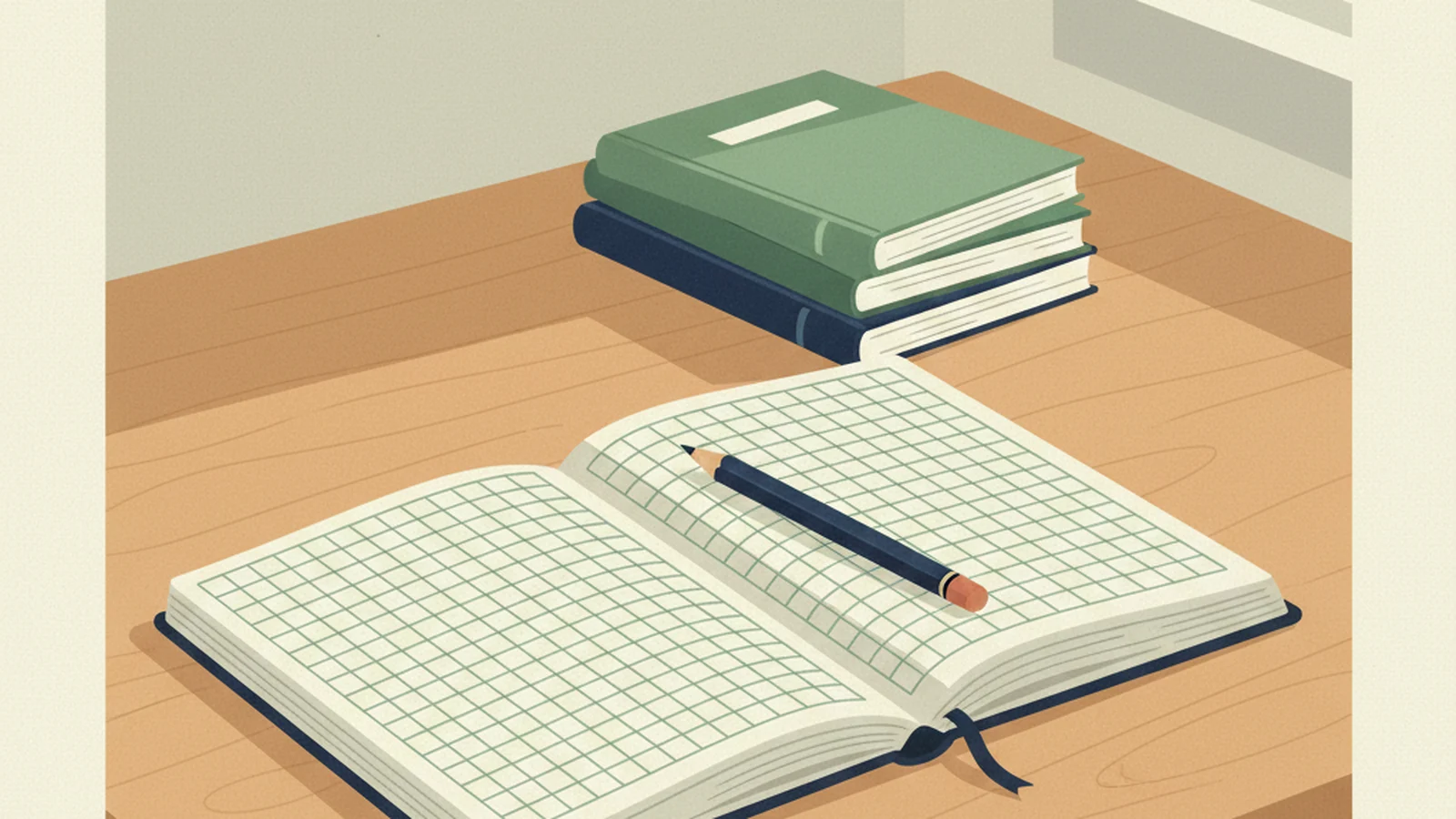
Genkouyoushi practice notebook
anySquared manuscript paper. Handwriting kanji in proper boxes is what fixes the shapes.
- おすすめの人:
- Handwriting practice alongside any kanji book.
- 私たちの評価:
- The squares are the point — kanji proportion is learned by fitting characters into a fixed box. Write each new character five times, not twenty.
A routine that works
- Learn the 40 most common radicals first. Two weeks, and it makes everything after easier.
- Five new kanji a day, each written five times, each said aloud with a real word.
- Write confusable pairs next to each other deliberately.
- Then stop writing and start reading. Writing builds the representation; reading makes it fast.
LenGakiで学ぶ:kanji
この内容を、すべて学べる
- JLPTの単語7,788語(N5〜N1)、読みと音声付き(N5は無料)
- 音読み・訓読み・書き順の練習付きの漢字2,057字
- 例文と間違えやすい表現の比較付きの文法445項目
- 本番形式のN5・N4模試。時間制限付きで、聴解は実際の音声で出題(N5の第1回・第2回は無料)

The summary
Basic Kanji Book for JLPT study, Remembering the Kanji if you want writing ability and will genuinely finish, Kanji Look and Learn if you already own Genki. Learn radicals before characters, write the confusable ones by hand, and remember that the exam tests readings — so a book that skips them is a detour, not a shortcut.